
Introduction: A Market That Looks Strong—but Isn’t Simple
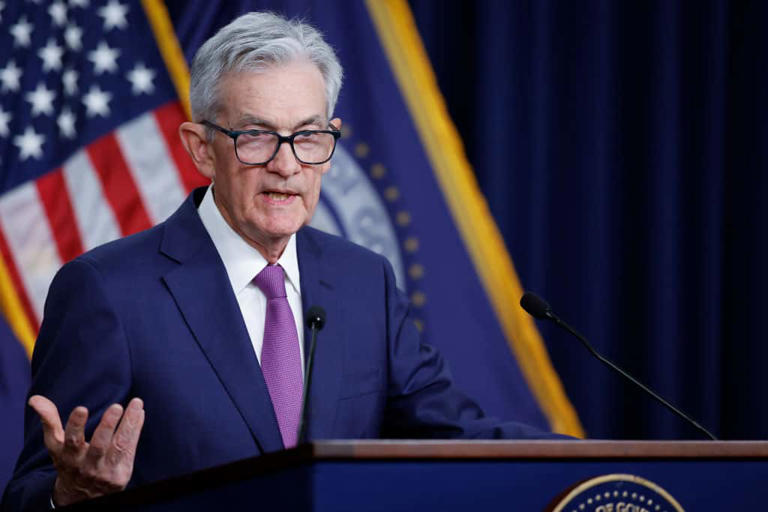
Jerome Powell ; The stock market is currently showing resilience, with strong corporate earnings and major indices staying near highs. But behind this strength, a layer of uncertainty is building. Recently, Jerome Powell issued a warning that has caught investors’ attention. His message highlights a key concern: the economic outlook is becoming more uncertain due to inflation pressures and rising geopolitical risks, especially in the Middle East.
This warning comes at a time when investors were expecting stability and possible interest rate cuts. Instead, the situation is becoming more complex, forcing markets to reassess expectations.
“Traders Need to Be Careful” – A Strong Signal from Schwab
Leading financial firm Charles Schwab recently advised caution ahead of the Federal Reserve’s decision, stating that traders need to be “really careful.” While the Fed is expected to keep interest rates steady in the 3.5%–3.75% range, the real focus is on what comes next.
A rate pause may seem neutral, but it actually reflects uncertainty. It means the Federal Reserve is not yet confident enough to cut rates, mainly due to ongoing inflation concerns. This puts the market in a wait-and-watch mode, where every statement from Powell becomes critical.
Strong Earnings, But a Cautious Outlook
Corporate earnings have been largely positive. Companies like Starbucks, Coca-Cola, General Motors, and UPS have all reported strong results, beating expectations.
However, there’s an important detail: many companies are not aggressively raising their future guidance. This cautious tone suggests that while current performance is strong, businesses are uncertain about what lies ahead. Factors like rising costs, global tensions, and unpredictable demand are making companies more conservative.
Powell’s Key Warning: Inflation and Uncertainty
At the center of Powell’s message is inflation. He clearly stated that the economic outlook remains highly uncertain and that global conflicts are adding to that uncertainty.
One major concern is rising energy prices. When oil prices increase, it affects transportation, production, and ultimately consumer prices. This makes inflation harder to control and reduces the chances of near-term rate cuts.
Powell also pointed out that while higher energy prices will push inflation up in the short term, the long-term impact is still unclear. This uncertainty makes it difficult for both policymakers and investors to plan ahead.
Interest Rates: A Shift in Expectations
Earlier in the year, markets expected multiple interest rate cuts in 2026. Now, that outlook is changing. With inflation remaining persistent, the Federal Reserve may keep rates higher for longer.
Some economists even believe that rate hikes could return in the future if inflation worsens. This shift from expected rate cuts to a “higher for longer” scenario is a major change—and markets typically react strongly to such shifts.
Valuation Risk: Is the Market Too Expensive?
The S&P 500 is currently trading above its historical average valuation. While this reflects optimism, it also increases risk.
If interest rates remain high or inflation rises further, investors may become less willing to pay premium prices for stocks. This could lead to market corrections, especially if expectations are not met.
Conclusion: A Time for Caution, Not Panic
The current market environment is a mix of strength and risk. Strong earnings and stable economic data are positive signs, but inflation, geopolitical tensions, and uncertain Federal Reserve policy create real challenges.
Jerome Powell’s warning is not a sign of immediate trouble, but it is a reminder that the market is entering a more uncertain phase.