
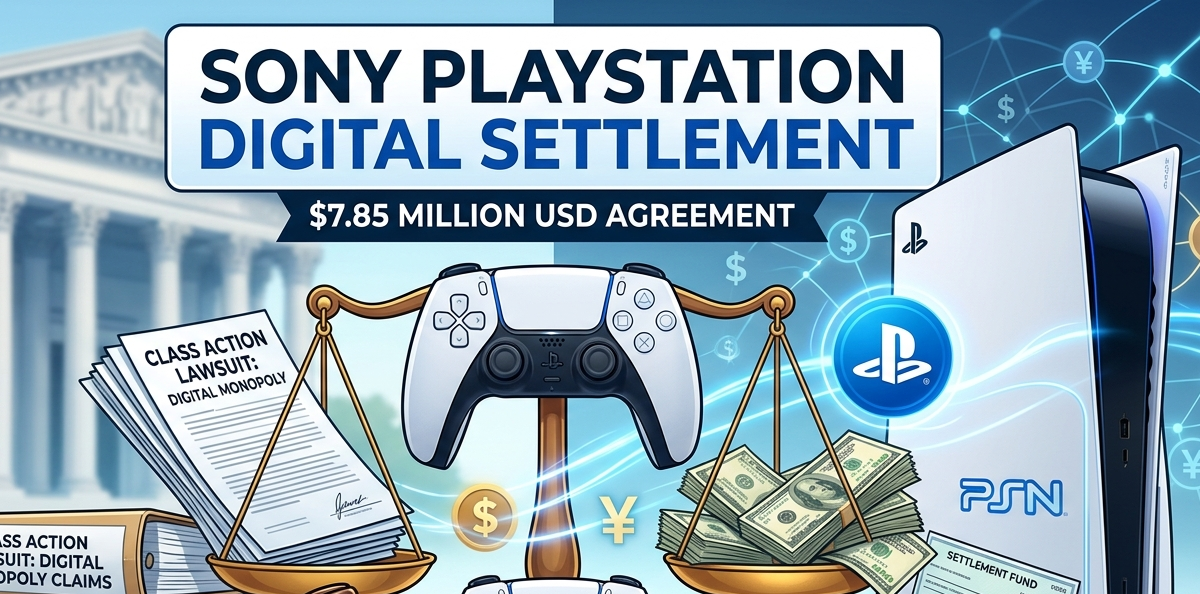
The Sony PlayStation lawsuit has emerged as one of the most significant legal developments in the gaming industry in 2026, drawing attention to how digital games are sold and priced. What began as a dispute over PlayStation Store policies has now evolved into a broader debate about competition, consumer rights, and the power of digital platforms. With a $7.85 million Sony PlayStation digital settlement now moving toward final approval, millions of gamers are watching closely to see how this case will reshape the future of digital gaming.
Background: What Triggered the Sony PlayStation Lawsuit
The lawsuit originates from Sony’s 2019 decision to stop selling digital game vouchers through third-party retailers such as Amazon, Walmart, and Target. Before this move, gamers could purchase discounted digital codes from these retailers and redeem them on the PlayStation Store. However, once Sony removed that option, all digital purchases were forced through its own platform. Plaintiffs argue that this change eliminated price competition and created a closed marketplace, effectively increasing the cost of digital games for consumers.
Settlement Details: $7.85 Million Agreement Explained
After years of legal proceedings, a U.S. federal court granted preliminary approval to a $7.85 million settlement in April 2026. This agreement aims to resolve claims that Sony’s actions restricted competition in the digital gaming market. If the settlement receives final approval, eligible users will receive compensation in the form of PlayStation Network (PSN) wallet credits. Although the payout per individual is expected to be relatively small—typically between $1 and $3 per eligible purchase—the case carries much larger implications for the industry.
Eligibility Criteria: Who Can Receive Compensation
The settlement applies to U.S. residents who purchased eligible digital games through the PlayStation Network between April 1, 2019, and December 31, 2023. Not all titles qualify; only games that were previously sold via third-party vouchers and experienced price increases after their removal are included. Popular eligible titles include The Last of Us Remastered, God of War 3 Remastered, WWE 2K series, NBA 2K18, No Man’s Sky, and Madden NFL 17. Consumers who meet these criteria are automatically included in the settlement unless they choose to opt out by July 2, 2026.
Legal Position: Sony’s Response and Court Status
Sony has strongly denied all allegations, maintaining that its business practices did not violate any laws or regulations. Importantly, the court has not ruled that Sony engaged in illegal conduct. The settlement represents a negotiated resolution rather than a legal judgment. A final approval hearing is scheduled for October 15, 2026, which will determine whether the settlement becomes official and payments can begin.
Market Impact: What This Means for the Gaming Industry
Beyond the financial compensation, this lawsuit highlights a critical issue in modern gaming: control over digital marketplaces. By centralizing game sales through its own store, Sony created a system where pricing is largely controlled by a single entity. This model is common across the gaming industry, meaning the outcome of this case could influence how other companies operate. If similar legal challenges gain traction, it could lead to increased competition, better pricing transparency, and more options for consumers.
Global Perspective: Rising Pressure on Digital Platforms
The Sony case is part of a larger global trend in 2026, where regulators are increasingly scrutinizing big tech and digital platforms. Similar lawsuits and investigations are underway in regions like the United Kingdom and Europe, focusing on whether companies are using their platforms to limit competition. This growing legal pressure suggests that the future of digital gaming may involve stricter regulations and more consumer-friendly policies.
Conclusion: A Small Settlement with Big Implications
While the Sony PlayStation digital settlement may result in only modest payouts for individual gamers, its broader significance cannot be ignored. This case represents a turning point in how digital marketplaces are viewed and regulated. It signals that even industry leaders like Sony are subject to increasing scrutiny and that the balance of power between companies and consumers may be shifting. As the final decision approaches in October 2026, the outcome of this lawsuit could help define the next chapter of the gaming industry.