
Introduction
The conversation around artificial intelligence has shifted dramatically. It’s no longer about whether AI will impact jobs—but how fast that transformation is happening.
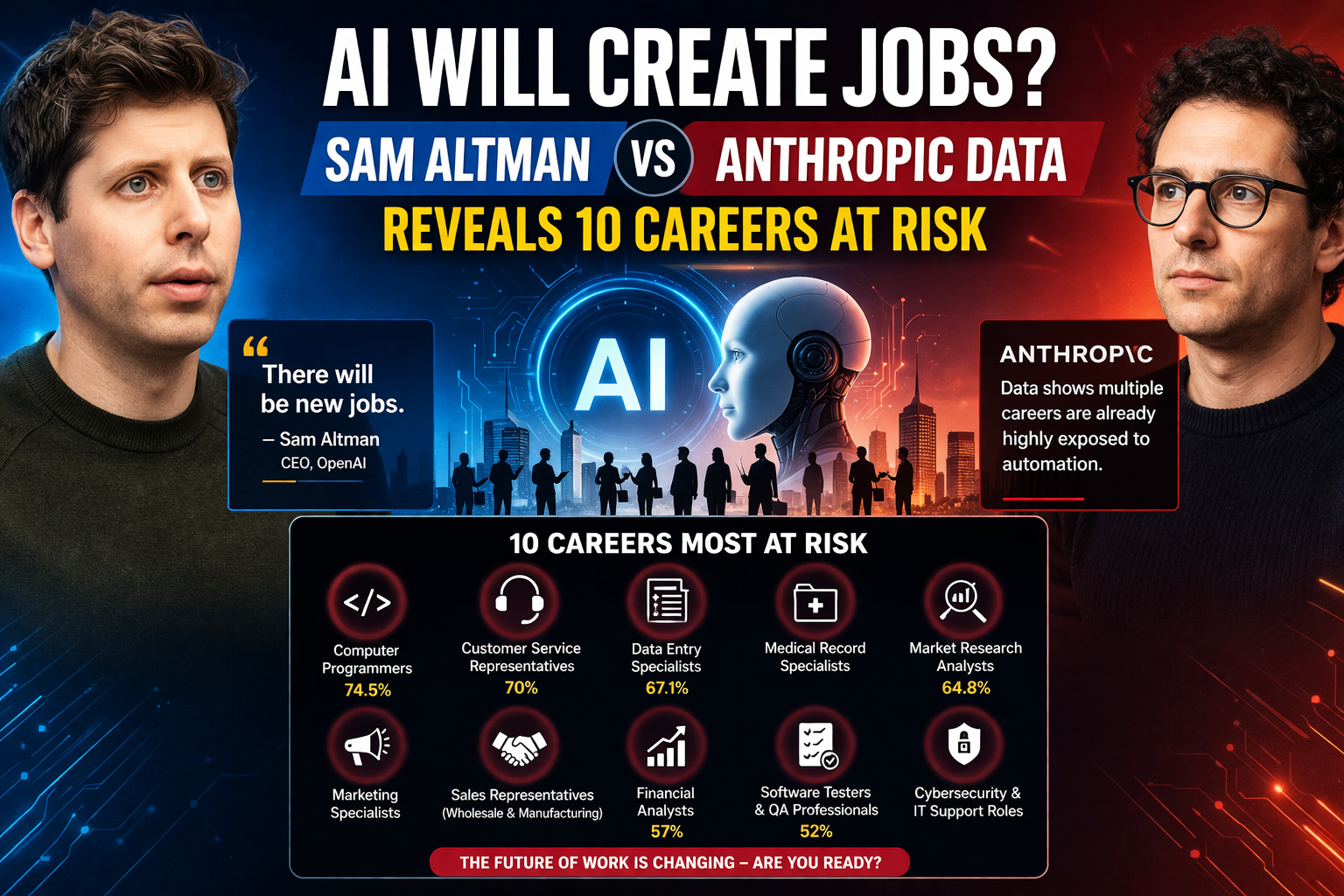
Recent insights from Sam Altman and new research from Anthropic reveal a complex reality: while AI may create new jobs, it is already reshaping—and threatening—many existing ones.
This dual narrative presents both opportunity and uncertainty for the global workforce.
Sam Altman’s Vision — AI Will Create New Jobs
According to Sam Altman, the world is entering a new phase of computing—one where AI doesn’t just assist humans but actively transforms how work is done.
He suggests that we are approaching a stage close to Artificial General Intelligence (AGI), where AI systems can:
- Generate new scientific discoveries
- Perform meaningful economic work at scale
- Accelerate productivity across industries
Table of Contents
Altman emphasizes that while jobs will evolve, they won’t simply disappear overnight. Instead, AI will:
- Take over repetitive and structured tasks
- Enhance human productivity
- Shift the nature of work rather than eliminate it entirely
He also highlights a critical concern: society may need to rethink how economic value is distributed if AI increases the gap between capital and labor.
AI Is Already Changing Work Today
The transformation is not theoretical—it’s already happening.
For example:
- Coding workflows have changed significantly within just a year
- AI tools now assist in writing, debugging, and optimizing code
- Routine tasks across industries are increasingly automated
This rapid shift shows that AI is not a future disruption—it’s a present reality.
Anthropic Data — 10 Careers Most at Risk from AI
While optimism exists, Anthropic’s data provides a more grounded perspective. The company analyzed how often AI systems can perform tasks associated with different professions.
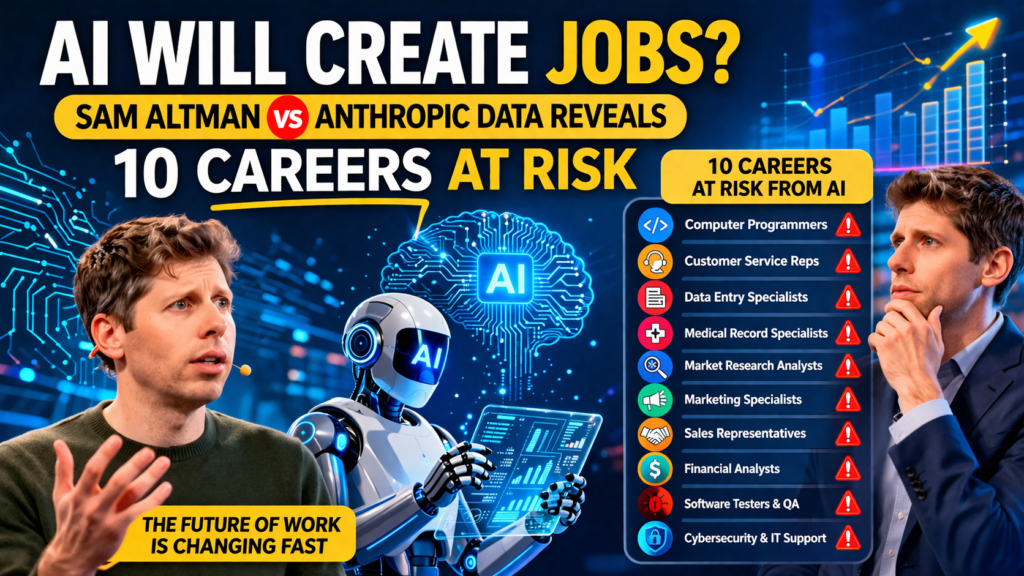
Here are the 10 careers most exposed to automation:
Highly Vulnerable Roles
- Computer Programmers (~74.5%)
- Customer Service Representatives (~70%)
- Data Entry Specialists (~67.1%)
Healthcare & Administrative Roles
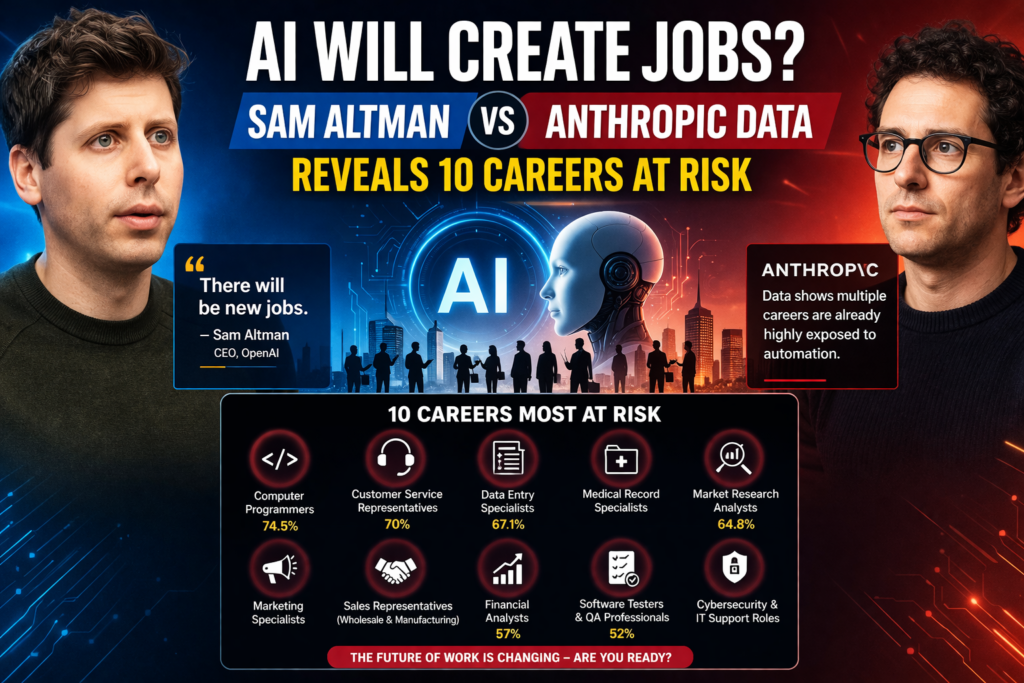
- Medical Record Specialists
Business & Analytical Roles
- Market Research Analysts (~64.8%)
- Marketing Specialists
- Sales Representatives (Wholesale & Manufacturing)
Financial & Technical Roles
- Financial Analysts (~57%)
- Software Testers & QA Professionals (~52%)
- Cybersecurity & IT Support Roles
These findings show that even skilled, knowledge-based professions are not immune.
Why These Jobs Are at Risk
The common thread among these roles is not industry—but task structure.
Jobs are more vulnerable when they involve:
- Repetitive processes
- Predictable decision-making
- Data-heavy workflows
- Rule-based execution
AI excels in these areas, often performing tasks faster, cheaper, and with fewer errors.
The Bigger Picture — Jobs Will Evolve, Not Just Disappear
Despite the risks, the future of work is not purely negative.
AI is expected to:
- Create new job categories
- Enhance existing roles
- Increase demand for hybrid skills
Rather than replacing humans entirely, AI will likely augment human capabilities, leading to new forms of collaboration.
What This Means for the Future Workforce
To stay relevant in an AI-driven world, professionals must adapt.
Key Strategies for Survival and Growth
- Upskill continuously (AI, data, digital tools)
- Focus on human strengths (creativity, empathy, critical thinking)
- Embrace AI collaboration instead of resisting it
The future workforce will reward those who can work with AI, not against it.
Conclusion
The debate between Sam Altman’s optimism and Anthropic’s data highlights a crucial truth: AI is both an opportunity and a disruption.
FAQs (Voice Search Optimized)
Will AI replace jobs completely?
No, AI is more likely to transform jobs rather than fully replace them. Many roles will evolve with AI integration.
Which jobs are safest from AI?
Jobs requiring creativity, emotional intelligence, and complex human interaction—such as leadership, design, and healthcare—are generally safer.
How fast is AI changing the job market?
AI is already impacting jobs today, with noticeable changes happening within months to a few years.
What skills are most important in the AI era?
Critical thinking, adaptability, creativity, and AI literacy are among the most valuable skills for the future.